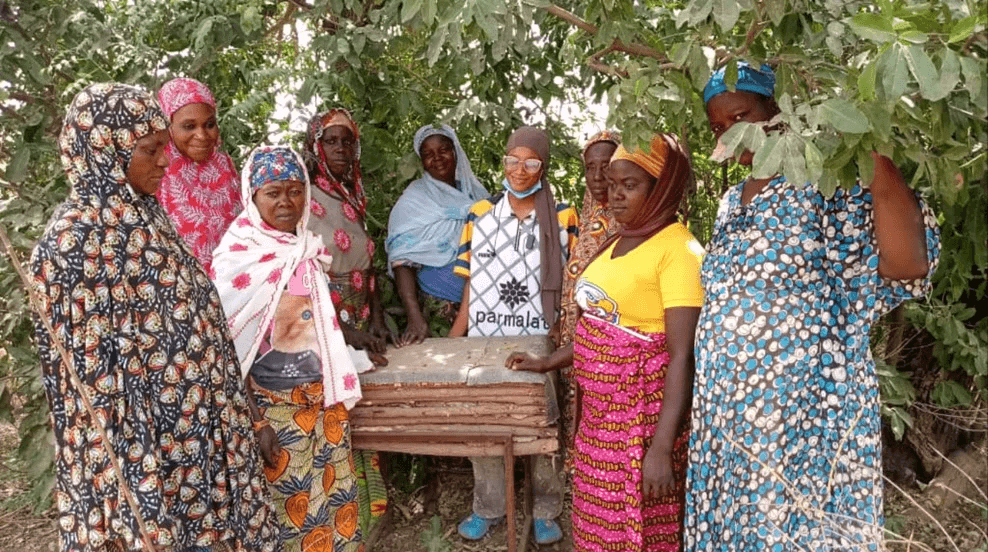
Our beekeeping project in the Kumbungu district has grown more quickly than we expected. Here’s an update on our progress and what it means for the families involved.
From five groups to ten
We began in Kumbungu with five community groups. Each group included thirty women and five men, all part of local shea butter or cereal co-operatives. While beekeeping was new here, people already knew a lot about bees. The community has a long history of 'hollows hunting,' which means collecting honey from wild colonies in trees.
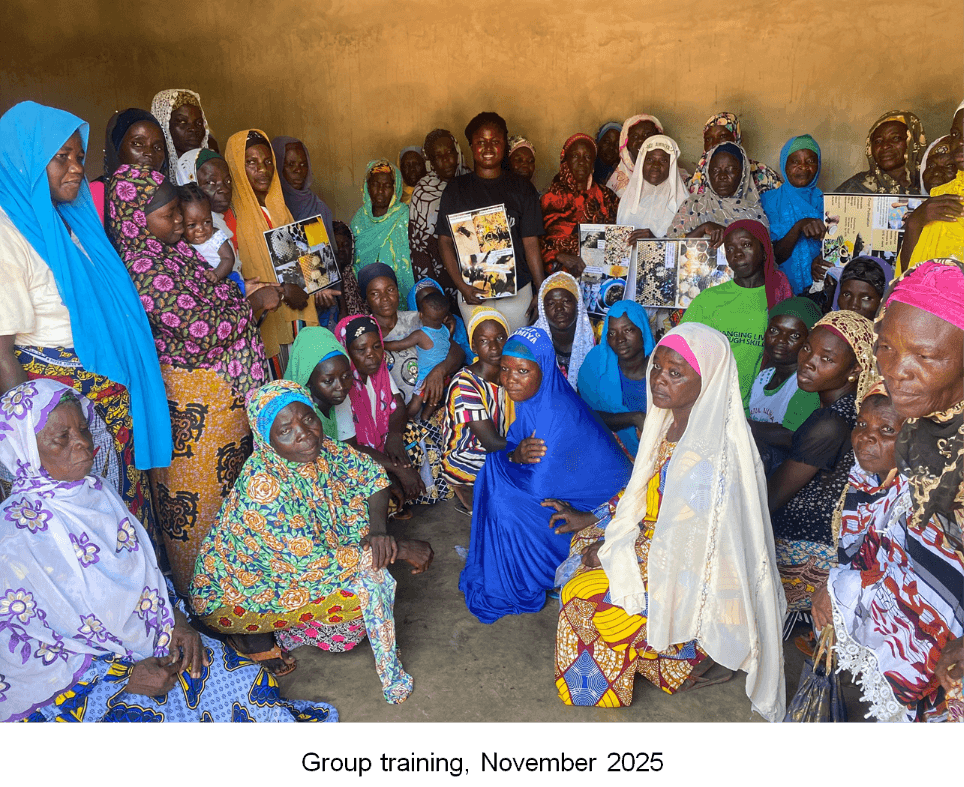
Word spread quickly, and more groups wanted to join - we now work with ten groups. So far, 280 women and men have finished beekeeping training, and another 70 will train this year. This will bring the total to 350 people, which is twice as many as we first planned.

A local training team
Bees Abroad’s Ghana Regional Trainer Network is delivering the training, together with two young local women graduates. This is the first time women have joined our trainers’ network in Ghana, and we hope that they will encourage other young women to take on leadership roles confidently.
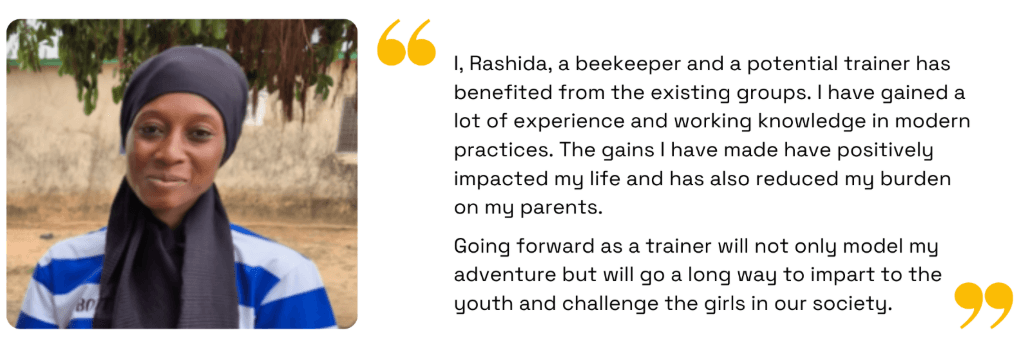
In one of the groups, we have already seen young Rashida take leadership. She began as a participant and is now learning to become a trainer herself.
"The gains I have made have positively impacted my life and reduced the burden on my parents. Going forward, as a trainer, I will go a long way to impart to the youth and challenge the girls in our society."
Local trainers make a big difference. They know the community well, can visit often, and help keep knowledge in the district long after the Bees Abroad project has been completed.
Beekeeping through the dry season
The dry season is the toughest time for new beekeepers. The harmattan winds are hot and dry, and bush fires started by hunters can disturb the bees. Some colonies have left their hives because of the smoke and heat, but we have not lost any hives.
To protect the apiaries, the team is planting vetiver grass to act as natural firebreaks and thorny acacia as living fences. The acacia keeps animals away and gives bees more shade and food.
The bees are starting to settle in. In one group, Belaŋ Nabira, the number of occupied hives went from six to seventeen between visits. That’s a strong result for the first year.

The first honey
This year, the first groups harvested honey. Two groups collected about five litres each. While it’s a small amount, it’s worth about 250 cedis, which is roughly the price of a sack of planting maize, enough to invest in the next farming season.
For families who have had a poor harvest, this income is important for building economic resilience against the rapidly changing climate. It can pay school fees for children who are the first in their families to attend school. It can also cover a medical emergency without forcing the family to sell an animal they need.
This is the purpose of the project. As more hives fill and more honey is produced, the groups that succeed will move on to a longer-term phase, with more training and support. over an additional two years with the goal of strengthening their beekeeping activities as a sustainable source of livelihood.
Support projects like these
Communities like Kumbungu are building lasting livelihoods through beekeeping. Your donation helps support projects like this in Ghana and in other communities where help is needed most.
Click the button below to know more.
You might also like





Donate